Piper’s Perfection?
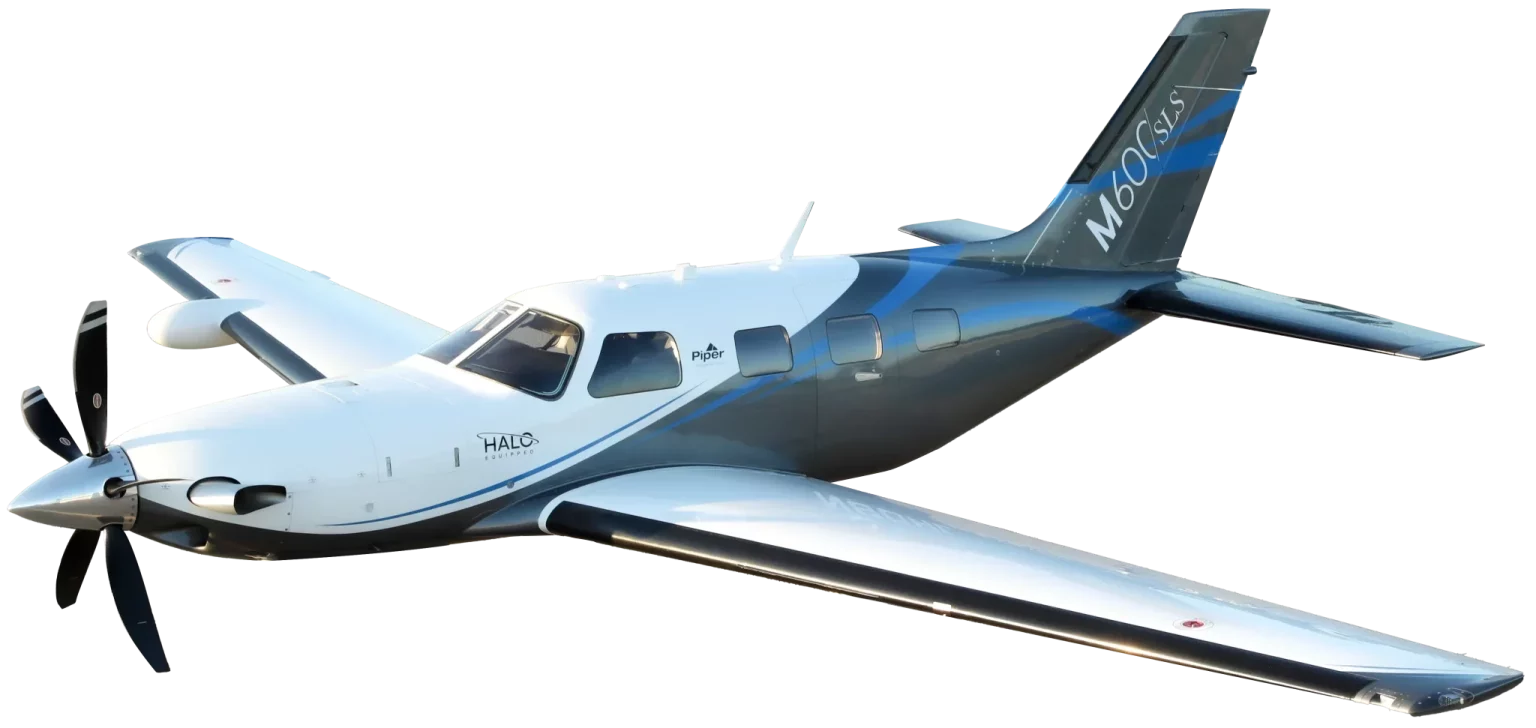
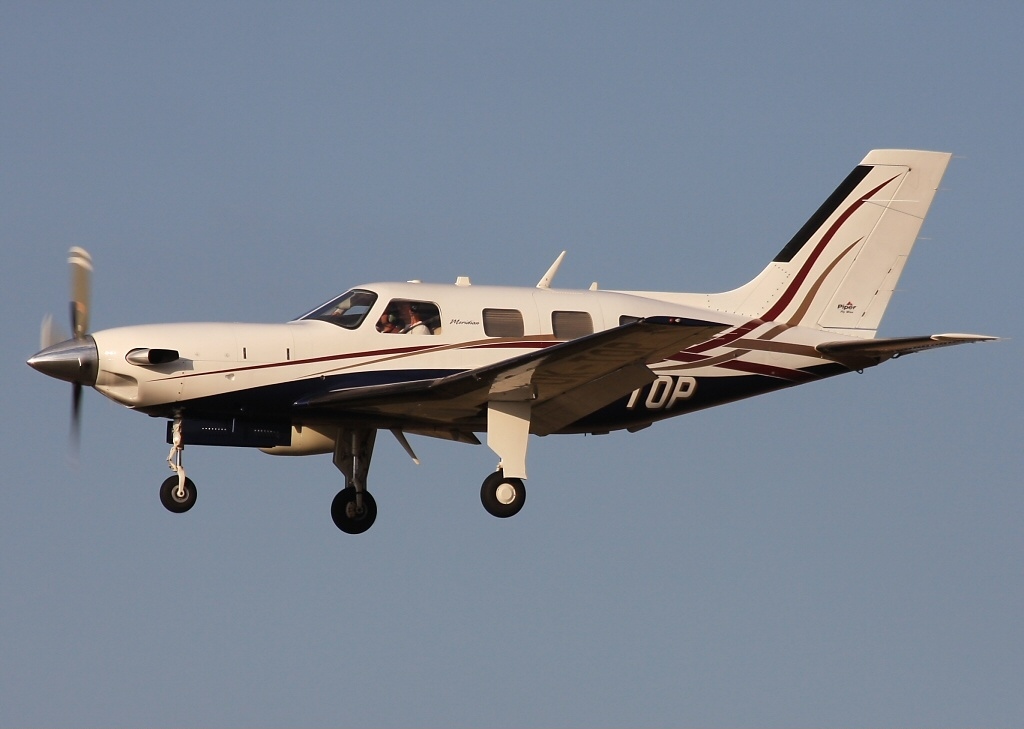
New Piper's current flagship product, the Malibu Meridian, is much more than simply bolting a PT6 on the front of a Mirage. From the cabin to the panel to the spinner, New Piper's turboprop single is top of the line. Just be sure to balance what's in the tanks against what's in the cabin.
The preparation leading up to my first flight in a new aircraft design always renews my sense of adventure and stirs a bit of trepidation, as well. The promise of some new adventure, rooted in my hedonistic curiosity about airplanes, generally overwhelms any degree of anxiety attached to the coming flight. Nonetheless, arriving at the main gate of The New Piper Aircraft Corp.'s Vero Beach, Fla., facility before dawn this morning found my little internal conflict closer to stalemated than usual; a draw, if you will.
My mission today: First, photograph New Piper's essentially all-new PA-46-500TP Meridian in a post-dawn, air-to-air mission, then sample the flying qualities of the sleek propjet single. The sequence of my missions provided the antidote to my nagging anxiety. After about an hour of watching the rising sun make magic of the Meridian's svelte, sleek lines, my photo "willies" vanished and I found myself anxious only about how quickly they'd let me at it and hopeful they'd let me keep it for the morning.
Watching it aloft made me realize that the Meridian is really nothing more than an unusually powered single — and past work put me at the controls of both a piston-powered Malibu Mirage and another Mirage converted to turboprop power. Sure, the Meridian departs from the Mirage in more ways than engine power but, at its roots, the Meridian still looked and acted like other singles I've flown and photographed.
And within a few minutes of our launch from Vero Beach, while trimming for level flight at 17,500 MSL, the Meridian and I made friends. Settling into the environment a score or so miles out over the Atlantic, the well-designed flight deck, easy single-pilot manners and great flying characteristics made me wonder about my original anxieties. Maybe a bit of piston envy?
The overall package of parts that makes up the whole of the Meridian made me feel right at home, even without prop and mixture controls. The Meridian's $1.7 million package of equipment delivers capabilities exceeding the best piston twins and approaching that of the latest business jets. At the same time, purchase, care and feeding doesn't keep up with the bigger dogs of the business-jet world — at least, as that world exists today — versus what it may look like a couple of years hence.
No, it's not as fast as, say, a Cessna Citation CJ1; at 270 knots, however, the Meridian certainly is no slug. Yeah, the TBM 700 goes about 30 knots faster, but for a price about $800,000 higher. There's nothing else quite comparable, for the money or the capabilities. About a million less than its closest single-propjet competitors, hundreds of thousands more than today's leading piston twins, the Meridian stands alone in its price range with operating economies not far off the twins with speed rivaling more-expensive wings.
With great control harmony, intelligent cockpit ergonomics and systems simplicity, New Piper may have come its closest yet to creating a perfect pilot's package.
Pilots with more insight and knowledge than me can debate what makes an airplane perfect and whether the Meridian fits that profile. And while it may not be perfect, the Meridian certainly comes close, and it works well enough for a perpetual piston-plane player to believe his own skills and experience to be plenty to safely and efficiently operate a Meridian, if circumstances actually allowed me to own such an aircraft.
The one exception to the Meridian's superlatives comes in full-fuel payload, where the Meridian, unfortunately, enforces payload limitations as strict as virtually every aircraft in its performance class, except for the robust, much-larger, much-more expensive Pilatus PC-12. Payload well under 500 pounds at full fuel is seldom the limiting factor it may imply. The typical business mission rarely covers more than 500 nm but, if needed, the Meridian can easily live with the lower fuel requirements needed to handle two, three or four, with luggage, while its striking speed makes magical, short work of those typical trips.
Magic In The Motor
Venerable PT6A Turboprop Mates With A Great Airframe
But making that magic involved evolving the Malibu to match its Pratt & Whitney Canada PT6A-42A turboprop engine. Despite the simple concept behind the model's evolution — take the Malibu airframe, toss the turbocharged piston engine, bolt on a turboprop, go fly — the Malibu Meridian represents considerable airframe evolution beyond Jim Griswald's original design. Of course, the engine is the biggest and most-noteworthy departure; most of the other changes reflect a need accompanying that powerplant change.
Take, for example, the horizontal tail feathers, the size of which were increased by 37 percent when compared to those of the Malibu and Malibu Mirage. Of course, there are other differences also: stronger landing gear to handle the Meridian's higher gross weight; a reinforced main wing spar, also to handle the higher loads; the addition of fillets to the inboard section of the wing, to better carry the higher weight, improve low-speed handling, normalize stalls and increase fuel capacity; a redesigned interior that expands internal luggage space; and a cowl design that departs from what you commonly see surrounding a PT6A.
But it's the engine change that makes the plane and drives the other changes. And that engine change essentially makes the Meridian everything the original Malibu was supposed to be while hopefully sidestepping the string of engine problems that have plagued the design since its launch in 1983.
The worst aspects of Piper's impressive PA-46 airframe generally stemmed from its engines. The original PA-46-310P Malibu mounted a Teledyne Continental Motors TSI0-520-BE. This mill was changed out for a 350-hp TIO-540-AE2A Lycoming to make the PA-46-350 Mirage in 1989. The community consensus for these problems: the excessive heat and wear created when you make a piston engine of these ratings provide power for both thrust and cabin pressurization. In other words, the engines must work too hard. Thus, you get TBOs of 1,400 for the Continental, 1,700 for the Lycoming, if they make it to TBO.
For the Meridian, New Piper elected to use the mature, well-understood Pratt & Whitney Canada turboprop engine to evolve the Malibu Mirage to the next level. New Piper launched the Meridian with the PT6A-42A, initially flat-rated down to 400 shp for this installation from its 1,029 shp thermodynamic maximum. Ultimately, however, Piper raised the horsepower rating up to 500 shp.
More Power, Better Performance And Top-notch Reliability
The more-power perspective should need little explanation; 500 shp, even as a flat-rating, exceeds 350 hp by about 43 percent. With more available power — and the power available right up to the 30,000-foot service ceiling — the Meridian should climb and fly faster, even while carrying more weight.
With a 3,600-hour hot-section inspection interval — the turbine equivalent of a TBO cycle — the Meridian owner can fly nearly double the hours of a Mirage owner without facing even that expense, let alone an overhaul. And with the PT6A-42A required to make less than half its full rated power, the engine should never come even close to a temperature or pressure operating limit. Likewise, with an ISA rating of about 50 degrees above standard, hot-and-high problems should never surface for the engine.
Wow, Whatta Cowl
Meridian Installation Makes PT6A Look Svelte
At first glance, a veteran aviator might not discern that the Meridian sports a PT6A engine because the clever cowling design lacks the guppy-like chin scoop characteristic to most PT6 installations. In aircraft ranging from the venerable Beech King Airs to the PC-12, the reverse-flow PT6A engine takes intake air from those distinctive scoops, some of which look like they could swallow a Cherokee whole.
In those installations, the chin inlet routes air to an inlet ring on the aft of the engine itself. Between the 90-degree direction changes the air must take and a pilot-controlled centrifugal separator at the aft end of the inlet, foreign objects like ice, dirt, debris and even rain are separated and ejected. New Piper engineers mirrored the approach Cessna used on the Caravan and it results in an aerodynamically cleaner installation.
In designing the cowling to meet that goal, New Piper engineered a trio of NACA-style scoops in the lower half of the cowl. The two outboard inlets direct air to the engine inlet; their shape and position discourage ice formation, eliminating the need for anti-ice protection for the inlets. A new separator works full-time and requires no pilot action, simplifying the flight deck and the manufacturing processes related to the cowl and flight deck, both.
The smaller, center inlet directs air to the engine oil cooler, and also requires no anti-ice protection. With its brawny, four-bladed Hartzell constant-speed, reversible prop, the Meridian looks downright racy, like a track-bred racer masquerading as a luxury sedan. And New Piper elected to complete the sleek installation with a pair of exhaust pipes specially shaped to help keep the PT6's trademark exhaust soot off the fuselage and wing roots.
The result is a PT6A engine installation uncharacteristically sleek and clean compared to other airframes using the powerplant. Cleaner means more speed and better fuel numbers, a win/win situation. The cowl design also makes the Meridian appear much longer than the Malibu and Mirage. But the appearance is more illusion than reality; the Meridian measures only 9 inches longer.
Other Changes, Major And Minor
Essentially, New Piper retained unchanged only the fuselage/pressure vessel of the original PA-46, with many other subtle changes — some of them largely invisible — to give the Meridian the balance and harmony it possesses. As noted above, many of these changes reflect the engine swap or related weight and performance changes.
For example, New Piper strengthened the wing main spar to better accommodate the higher speed and weight of the Meridian. You can't see it, but the structural changes show up in the spar's weight, which is about 43 pounds heavier than the original one. And since so much else of the wing is common, the company in 1999 adapted the Meridian spar to the Mirage. This avoided the added fabrication complexity and expense of producing two different spars while giving the Mirage a 60-pound gross-weight increase.
In contrast to the invisible spar change, you can see the new cuffs added to the wing at its root, which contribute to the final package in multiple ways. That higher weight would have increased the loading on the original wing; glide and stall speeds would also have grown. But the cuffs increase wing area to keep wing loading in line. The cuffs also provide space for the 173 gallons of fuel the Meridian carries and help maintain proper airflow across the wing at high angles of attack.
The engine change eliminated the forward luggage compartment between the engine compartment and the fuselage of the Malibu. Many owners found that little compartment ideal for cabin covers, chocks, engine-inlet plugs, pitot covers and the prop restraints used on PT6 installations. To make up for the loss, the designers redesigned the cabin and increased storage space behind the aft pair of seats. They also redesigned the back seats for easy access to that area.
So, as similar as the Meridian and Malibu models may appear, they differ far more than in engine alone. The Meridian really seems all about change, which resonates with how New Piper has built itself back from bankruptcy by making positive, forward-looking changes to its model line, across the board.
MAGIC In The Panel
Meridian Goes State-of-the-art With Meggitt, Garmin

If major changes in the powerplant, wing, gear, tail and interior weren't enough, New Piper also opted to offer a panel that can only be described as state-of-the-art. For basic navigation and communication chores, my test airplane carried a pair of Garmin GNS 530 all-in-one units. There's little new for me to tell you about these modern marvels of electronics and microprocessors that you haven't already heard or read.
Perhaps the only comment you haven't heard before is that the two big-screen avionics boxes looked uncharacteristically small in the Meridian's vast expanse of panel space. Otherwise, they both worked and played well with the new S-TEC System 550 flight-control system installed in the airplane.
But New Piper didn't stop there. Complementing the advanced technology of the Garmin and S-TEC equipment was a full six-screen complement of electronic flat-panel displays from Meggitt Avionics, the first factory-installed application of the company's new MAGIC hardware. Meggitt's equipment handled the functions of more than a dozen mechanical instruments you'd normally find in a high-performance airplane like this.
Two Primary Flight Display screens in the panel basically replicate the three main gyros — attitude, direction and turn — plus altimeter, airspeed, and vertical speed instruments. The second PFD display on each side mimics the navigation instruments: an HSI, plus an OBS and CDI, taking information from GPS, VOR, ADF and other sources and combining the information on one large display.
The other two displays are called EDUs — Engine Display Units — and basically replace the engine instruments you'd normally find in a propjet-powered airplane, including all the salient temperatures, tach and torque. Since the engine turns at a constant speed of about 2,000 rpm, torque is the parameter used to set power.
Same Data, Just A Different Look
If combined representations of all these items on screens instead of the usual mix of steam gauges and dials sounds intimidating, relax. Meggitt and New Piper, with a lot of encouragement from the FAA, basically retained the individual look of the gyros and navigation indicators, while opting for easy-to-understand vertical tapes for the air data. It only sounds intimidating until you start to use it.
The engine displays were equally easy to read since their data are presented as both analog and digital displays. The displays work some neat magic by changing from green to yellow to red as a parameter moves from normal to borderline to excessive.
And No Vacuum Pumps
In essence, Meggitt's MAGIC makes the Meridian an all-electric airplane — at least in the panel. So New Piper gave the Meridian more than a bit of electrical-system redundancy. First, the engine drives two completely independent generating sources, a 240-amp starter/generator and a 120-amp secondary alternator.
Standby instruments mounted top-center in the panel include an attitude indicator, altimeter and airspeed indicator. But the need for the back-up instruments seems a long shot, since Meggitt's MAGIC system includes two independent attitude/direction/air data sources to drive the primary flight displays, one in each wing.
New Piper also provided the Meridian with the needed back-up oxygen system in the unlikely event of loss of cabin pressure. The pressurization system represents nothing new or advanced and has decades of use in other applications from King Airs to Mirages.
Comfort And Class At Five Miles A Minute
Kicking The Tires
If all this technology and change sounds intimidating, then you understand my original anxiety. But the reality was in stark contrast to my expectations. Despite the advanced nature of some of its technology, the Meridian proved fairly simple to operate. And that simplicity first showed up during a preflight inspection that involved little different than typical of other high-performance singles.
The primary goal of the walk-around is to check for damage, assure the integrity of control-surface linkages, check fluid levels, examine tires and struts for proper inflation, and inspect the prop and airframe for good general condition. It's simple, straightforward and easy.
Much of the checklist seems an exercise in litigation mitigation, designed with Torts 101 in mind: Anyone can be sued for anything by anybody at any time. Once you realize that, the intimidation factor of seeing a lengthy preflight paper trail diminishes to pretty much nothing.
It's worth mentioning that part-and-parcel to the purchase of a new Meridian is a week of transition type training at SimCom's facility near New Piper's factory at Vero Beach. It's a continuation of a practice Piper established for its Malibu customers nearly two decades ago.
Lighting The Fires
The POH takes you through the specific considerations for the Meridian — checks of the dual electrical systems, batteries, fuel pumps, and more — before it's time to throw the switches to start the PT6A. But when that time comes, it's fairly simple: Fuel system primed, autostart engaged, and watch the Meggitt engine-monitor screens.
When the engine catches, you pull the fuel control into the run position and throw the avionics master — and sit. You sit for three minutes to allow the two ADAHRS boxes to orient themselves. Meggitt cleverly built a timer into its system that counts down from 180 seconds.
Since my flight plan began and ended at Vero Beach, my three minutes went toward becoming more familiar with switch and handle locations, the look of the Meggitt displays and my seating position. The fully adjustable seats made it relatively easy for me to find a sweet spot.
Launching
With flaps at 20 degrees for takeoff, I turned the Meridian onto Runway 29L, advanced the power lever toward the 1,180-pound mark and released the brakes. Barely faster than you can say "William T. Piper would a proud Meridian Papa be" a couple of times, the Meggitt airspeed readout confirmed what the airplane's own feedback told me: Time to fly.
With little more than the thought of back pressure on the yoke, the Meridian eased itself off the runway and accelerated — through 90, through 110, through 130 — and I worked to trim the nose to about 120 KIAS. Cleaned up, the Meridian accelerated back to 140 knots.
With the engine set at 980 pounds of torque and while maintaining 140 KIAS, we reached 17,500 MSL in 14 minutes, an average climb rate of 1,250 fpm.
Cruising
Nearing 17,500 feet MSL — an altitude we chose so we could remain VFR — my left hand trimmed the nose down as my right one eased down the power, eventually settling on a setting that yielded more than 190 KTAS at a fuel flow of 215 PPH.
According to Meridian pilots in and out of New Piper, the best balance between speed and fuel consumption comes at 250 PPH, which produces 250 KTAS above FL220. These settings should make easy work of 1,000-nm legs, leaving comfortable reserves.
A Word About Systems Management
New Piper's engineers made fuel management easy with a stone-simple design: gravity feeds fuel from the two wing tanks to a header tank aft of the engine; from the header tank, an engine-driven fuel pump supplies the combustion chamber.
An automatic system senses an imbalance and pumps fuel from the heavy tank to the header until corrected; an annunciator shows when the system operates. Other than activating the boost pump for engine start, you never need touch a fuel-system control again until time to shut down.
Another no-brainer is in selecting your cruise altitude — at least, from a cabin-comfort perspective, since you won't suffer any discomfort regardless of how high you fly. At 17,500 MSL, the pressurization system gave us a comfortable 7,000-foot cabin; at FL250, the cabin altitude still remains a hospitable 8,000 MSL.
Friendly Flyer
Even With So Much New, A Balanced Airplane Stands Out
Often, my attention during a pilot-report flight focuses most on the engine-airframe combination and the integration of otherwise familiar gear such as avionics, instruments and autopilots. But with so many all-new airplanes debuting equally new, cutting-edge gear, it makes the work so much more interesting.
And the Meridian easily falls into this category. Aside from the two Garmin GNS 530s, everything in the Meridian was new to me and warranted sample time. And above all, the Meridian's hands-on flying traits, rather than the installed technology, make it an outstanding airplane.
Ergonomics Shine
Integration is excellent; the flight-deck layout acknowledges the single-pilot environment likely to dominate Meridian operations. Controls, electrical-system switches and avionics enjoy a logical deployment across the expansive panel.
Critical circuit breakers occupy a panel to the immediate left of the pilot, arranged top to bottom in order of importance. Breakers of lower importance are in another panel on the opposite side of the flight deck, again arranged with logic to their functions.
Although the resolution of the MAGIC screens seemed lower than from my memory of trade-show displays, the screen displays worked well and read well for me in the bright sunlight that flooded the panel during maneuvering.
The Meridian Is Smooth, Predictable
The Meridian flies well enough to make me look good and it felt good enough to make me feel like I was flying well. Although I didn't time the 45-to-45 rolls or measure the control pressures, the Meridian responded promptly on my inputs, and exhibited a resistance to rolling in line with what I've come to expect from an airplane that weighs close to 5,000 pounds going like a bat out of hell.
Stalls are straightforward and easy to deal with, in part thanks to the onset of pre-stall buffet a bit more than 10 knots ahead of the actual break. And while holding the yoke full aft long after the onset of stall, that longish nose did little more than bob up and down as the descent vacillated smoothly between about 750 and 1,200 fpm.
Unfortunately, the autopilot got short shrift during my flight since others waited to fly the same bird. The S-TEC gear handled the plane well in heading and nav modes and it held altitude well.
But hand flying is my main interest, and in the wholly analog world of hand flying an airplane, the Meridian stands out for its balance, its control harmony and response.
Even When Low And Slow
After completing my standard retinue of in-flight exercises, Vero Beach Approach directed me toward a coastal landmark southeast of the field and down to 4,000 MSL before the checkpoint. While turning to a southwest heading, I implemented my usual technique for descent control — simply easing back on power until the VSI display showed 1,500 fpm down — and sat back and relaxed.
At the shoreline, I trimmed the nose up and pulled the torque down in a coordinated dance to slow the Meridian below its 168-KIAS gear speed; with the wheels dropping, Approach asked me to continue down to 3,000 MSL.
I returned the rudder trim to neutral on the base leg and the tower controller cleared me to land as number two before my turn to final. Rolling out on final brought into view the number one plane for landing, a Flight Safety Seminole on short final.
And When Landing In A Crosswind
Now a bit too-high, too-close and slightly fast, I committed to landing with a quick power reduction and forward slip, left-wing low. The Meridian complied quickly and confidently, allowing me to correct what appeared incorrect and salvage the approach.
The powerful rudder and ailerons let me align the Meridian straight and square before descending to 75 feet above the threshold; with about 75 knots showing, I held the trim switch full aft and with a final power reduction to idle the Meridian settled — solidly — left wheel, right wheel, nose wheel.
We had about 20 knots of wind, 80 degrees off the runway centerline. Despite a demonstrated crosswind component of only 17 knots, the Meridian never felt as though conditions exceeded its control authority.
While taxiing in to the New Piper ramp, it struck me that concentrating on the airplane ahead of me kept me from noticing the crosswind. The control authority was up to the job and the harmony more or less masked how much cross-control input was needed.
Need More? Spend More, ’Cuz That's The Only Way You'll Get It Right Now
Price aside, the Meridian may be as good as they come. Shortly after this little missive appears, I fully expect to hear some "yeah-but" comments that insist my story ignores future airplanes — and maybe some used ones — in its conclusion that the New Piper Meridian falls within the top tier of all-around great airplanes.
In the meantime, there's no escaping the fact that New Piper delivered on its promise. The Meridian is one hell of a fine airplane, period. Perfect, perhaps? Well, so nearly so, but not quite so.
But...
First, the cons — con, really, since from my perspective the Meridian exhibits only one major target of criticism: full-fuel payload. Depending on options, figure somewhere in the neighborhood of 400-plus pounds of available payload when you top the tanks with 1,120 pounds of Jet A.
Of course, payload limitations this extreme are hardly new to general aviation. Light jets with full-fuel payloads of barely 500 pounds are not rare; high-performance piston singles with similar load limitations are also around. Which means Meridian pilots in need of greater cabin capacity need only plan for two-hour legs.
Otherwise, what's not to like about the Meridian? Fine handling, great control harmony, plenty of control authority, impressive climb and blistering speed in an attractive, roomy package, complemented by the latest in high-technology equipment. Driving it all is a veteran general-aviation powerplant renowned for its reliability, durability, easy operation and economy.
Can You Afford One?
Current Meridians, typically equipped, go for about $1.7 million. Options account for some of the bucks. For example, the MAGIC system requires about $97,000 — less than 8 percent of the base price. Other options include a radar altimeter, a second Garmin transponder, and S-TEC's ADF and DME.
New Piper also offers an optional entertainment center that replaces the aft-facing seat immediately behind the pilot. This piece of cabinetry includes storage space, a beverage cooler, stereo AM/FM radio and CD player and can be fitted with a videocassette player driving a flat-panel color display.
With the completion of known-icing tests and FAA certification, the Meridian offers a go-anywhere-really-fast potential to the pilot in need — or want — of five-mile-a-minute, comfortably pressurized transportation.
Of course, another option exists: JetPROP LLC's JetPROP DLX PT6A conversion of any airworthy Malibu or Mirage airframe. Figure upwards of $700,000 for the conversion, plus the price of the airframe. Interestingly, after flying both it struck me how similar the performance, range, fuel consumption — and restricted payload — of the two really are.
With one approach, you get a brand-new airplane with a state-of-the-art panel and numerous airframe changes to compliment the engine. With the other, you get a highly capable airplane at a lower price with the stock panel and system upgrades to make the engine/airframe combination work sensibly.
Since neither option is in my budget, it's easy to imagine myself making the grand choice to buy new. But in reality, if I had the resources for one option, I'd have 'em for the other. And in that unlikely event, I'd only be intimidated by the act of signing the check for the Meridian, because everything else about it makes it an excellent pilot's airplane.
The Meridian's handling seemed better harmonized than the JetPROP, a possible result of the subtle alterations New Piper made to evolve the Mirage. If you can't stand waiting on a list with about 140 people ahead of you, the JetPROP conversion should suffice.
But for an aircraft designed with the airframe tailored to the powerplant, for one with cutting-edge panel systems and a higher service ceiling, the Meridian offers the only option.
Dave
About the author
Dave Higdon has a distinguished background in aviation journalism. As aviation editor for The Wichita Eagle for more than five years, he established a reputation as one of the best general aviation reporters in the business. Previously, Dave held a variety of aviation journalism assignments with The Journal of Commerce, Air Transport World, and AOPA.
He has covered every facet of aviation from sport aviation in Tennessee to the FAA in Washington, D.C., to Cessna, Beech, Boeing and Learjet in Kansas. He's also a professional aviation photographer. Dave is an instrument-rated private pilot and owns a very clean Piper Comanche. He and his wife Annie live in Wichita, Kansas.
Archivbeitrag der bisherigen MMIG46-Website. Ältere technische, preisliche oder operative Aussagen können heute überholt sein. Maßgeblich sind aktuelle Herstellerunterlagen, behördliche Vorgaben, Wartungsunterlagen und qualifizierte Fachbetriebe.